
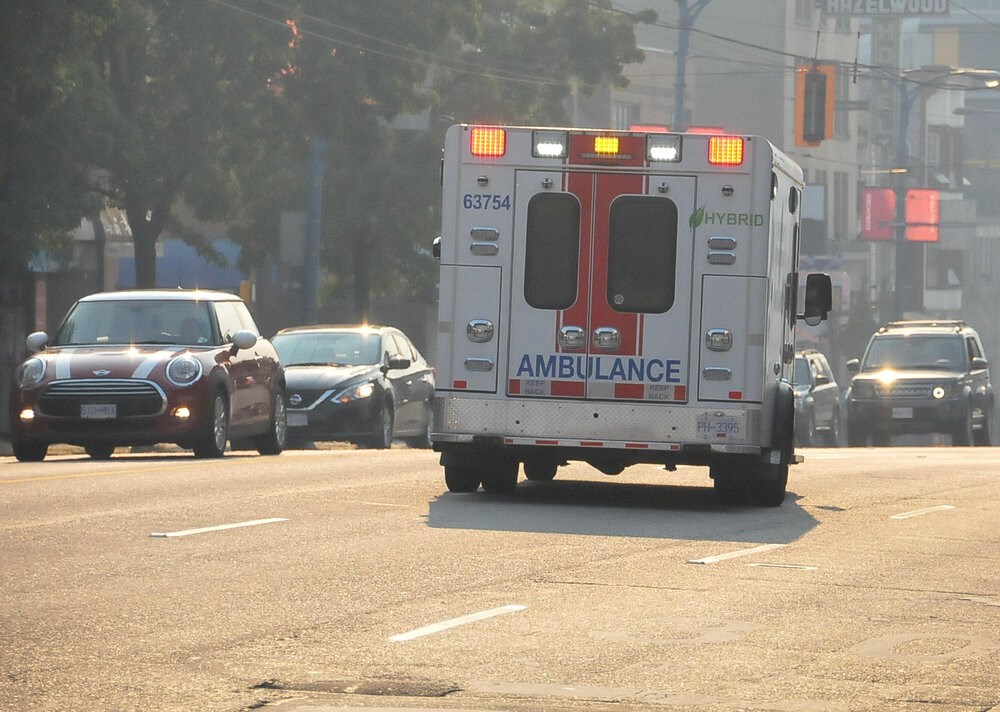

Vancouver Coastal Well being’s Medical Well being Officer unveils an unpublished report on the British Columbia warmth wave and the way it hit some areas of Vancouver more durable than others.
Who died in British Columbia’s deadliest heatwave? What may be completed to stop so many deaths sooner or later?
These are questions that the BC Coroners Service and BC Heart for Illness Management (BCDCC) are actively investigating.
In keeping with the coroner, 569 individuals died within the week-long heatwave that scorched BC in late June.
Dr. Sarah Henderson, scientific director of the BC Heart for Illness Management, environmental well being division, says most deaths occurred in personal properties the place individuals didn’t have air con. The rest occurred 35 % in hospitals and 30 % in nursing properties.
Extra individuals died in locations the place individuals had decrease incomes and had much less entry to timber. Many lived alone and most had been over 55 years outdated. None had been kids.
Throughout the province, cities like Vancouver, Burnaby and New Westminster had been hardest hit and recorded the best variety of deaths.
Nevertheless, it isn’t but clear which neighborhoods had been hardest hit.
In an unique interview, Dr. Michael Schwandt, Vancouver Coastal Well being Medical Officer, Glacier Media, explains how emergency room knowledge offers preliminary perception and what public well being must do earlier than the following warmth wave hits.
This interview was edited for the sake of readability.
What does the newest knowledge let you know about how the June heatwave despatched individuals to the hospital?
By far the biggest improve was in city areas.
In complete, we had over 200 heat-related emergency rooms. It’s believed that this can be a conservative estimate of the variety of visits because of warmth, as there could also be some well being situations that may very well be exacerbated by warmth that won’t have been coded as warmth particular.
So far as I do know, Vancouver Coastal Well being scheduled emergency room visits in the course of the late June warmth wave. Which municipalities recorded the best fluctuations?
A few of the hardest hit districts had been within the metropolis heart in addition to within the east and south of town.
We now have seen areas just like the West Finish in addition to the Downtown Eastside the place many residents of those areas dwell within the emergency room. After which some areas within the southeast of Vancouver.
The warmth-related emergency room price was roughly thrice that of Vancouver-Heart North in comparison with Vancouver Westside. That is primarily pushed by the Downtown Eastside.
Vancouver South was greater than twice as huge.
The entire tree / social profit speculation appears to shine by.
What can we learn about who went to the hospital?
As for the ER knowledge that we have now, we sadly don’t have any knowledge on individuals’s residing situations. I do know the coroner’s workplace and the BCCDC are investigating a few of these different threat elements.
We all know that outdated age or earlier sicknesses could make individuals extra vulnerable to excessive warmth, however so can the locations the place individuals dwell or spend their time.
Even inside this time, the problems multiply as there are issues such because the city warmth island impact, the place the neighborhoods are hotter than others as a result of traits of the built-up space. And even inside a sure neighborhood there are huge variations between the constructing sorts: that’s, high-rise buildings versus free-standing picket homes, the tree roof, which may very well be current in each rooms.
And even inside a constructing there are warmth variations between cooler basements and a comparatively sizzling attic.
Do well being authorities must do extra to remodel individuals’s constructed surroundings to guard them from lethal warmth?
I feel so. I feel long-term adaptation to local weather change entails the well being sector and dealing with others to review these vital protecting elements associated to local weather occasions.
I feel we’re enjoying an growing position in working with governments, probably builders, with different sectors in these environments that may each endanger communities and defend communities from excessive climate occasions.
The quantity of (tree) leaves we have now and the safety that may provide us from excessive warmth can inform the well being division: The place are the consequences of warmth occasions that we have now seen earlier than? … and make selections associated to the positioning of timber.
Proper now we’re working with the Metropolis of Vancouver to review constructing applied sciences utilized by individuals affected by the warmth wave.
For the reason that June heatwave, what else has public well being completed to guard individuals from excessive climate situations?
A brand new Steering Committee for Seasonal Readiness has been developed that formalizes this work as a part of the weekly planning.
What is admittedly essential is creating seasonal preparedness plans to guard our sufferers and communities.
These are at present being developed. And they’re all reviewed on the senior degree of our well being authority.
On some visits that made it to the emergency room, we wish to be certain the first care system is prepared for these surges.
The warmth dome this summer season made it clear that there are already excessive climatic occasions. What must occur when public well being groups plan the following heatwave to make these plans a actuality?
This takes the need and sources to do a lot of these items – issues like adjustments to constructing codes or large-scale cover management packages – all of these items require the involvement of a number of totally different components of presidency.
Public well being officers are attempting to catalyze motion on a few of these issues.
Typically this looks as if an insurmountable process, however we are able to take a look at what we are able to obtain within the very brief time period after which within the medium time period and in addition in the long term.
Whereas addressing issues like the cover of timber, this can be a challenge that we hope will happen over the a long time … altering the coverage to make individuals extra welcome in public areas always, particularly throughout excessive climate occasions; and packages to advertise social connections in order that neighborhoods and neighborhood members are inspired to verify one another out.
These are issues that may be modified in a comparatively brief period of time.
My protection discovered that many frontline neighborhood teams, often working to scale back the hurt triggered to drug customers, stepped in to offer important first support roles in the course of the heatwave. Do you see this as one thing different neighborhoods might be taught from?
Neighborhood-based organizations have completed an amazing job in the course of the heatwave. We now have had studies from so a lot of our employees who’ve interacted with sufferers and residents in our communities who’ve benefited.
I feel it will likely be essential to be taught these classes and attempt to repeat this in different areas.
It’s completely essential to keep up cool areas for individuals to entry, for instance, overdose prevention providers. Life-saving providers are virtually twice as excessive throughout a serious warmth occasion as a result of we all know that such occasions can improve the chance of overdose.
BC faces a variety of local weather change threats, from flooding to fallout from forest fires. Which excessive climate occasion do you assume will hit British Columbians the toughest within the years to come back?
Warmth is among the best public well being dangers.
I imply, we in fact produce other main well being issues – infectious illnesses, together with COVID-19 – which have doubtless resulted in additional deaths lately.
However given local weather change, I feel excessive warmth is among the most instant and influential.
Occasions like this yr put the warmth excessive on the listing.
The place are the boundaries to the best way cities adapt to excessive warmth right this moment?
In the long term, I do not assume we are able to “let this downside cool us down”.
We have to take a look at the properties that individuals have entry to. Due to this fact, enough and inexpensive housing should embrace the flexibility to chill a room down throughout a warmth wave.
Traditionally in BC this may occasionally not often have air con, warmth pumps, and so forth.
However I feel that sooner or later we must assume extra preventively: methods to chill down whole components of town like with treetops, take a look at the quantity of site visitors and the character (and in addition the affordability) of the residences that we’re constructing.
***
This story is a part of a analysis by Glacier Media that examines how the heatwave affected neighborhoods in Vancouver otherwise, and the way town is attempting to unravel the issue – with timber.
Stefan Labbé is a options journalist. That’s, it covers how individuals reply to issues associated to local weather change – from housing to power and all the things in between. Do you might have a narrative concept? Get in contact. E-mail to slabbe@glaciermedia.ca.
[ad_2]
